Many aspiring freedivers have been asking me if they can still learn freediving even if they can’t swim. Short answer, YES! But to set your expectations, it will not be easy, and there will be moments when you question yourself. Still, by the end of your first freediving lesson, there’s a very high chance you’ll look back and say, “I’m so glad I did this.”
Learning freediving will unlock parts of you that you never knew existed. It will boost your confidence, deepen your self-awareness, and show you your true limits and strengths. You won’t just learn how to move in the water. You will also learn how to breathe, relax, and trust yourself, not only when you are freediving but also when you are back in the real world, dealing with everyday life.
In this blog, I’ll talk about the honest truth behind the question: “Can I learn freediving even if I can’t swim?” I’ll share why it can actually be easier for a non-swimmer to start with freediving than with lap swimming, and how a properly guided beginner freediving course in the Philippines can help you go from zero to hero in a safe, structured way.
You Will Be Scared, But You Will Learn How to Face Your Fears
When I was freediving for the first time, I was scared, too. My heart was racing, my mind was loud, and every “what if” suddenly felt very real. Who isn’t nervous about first times, right? If you’re not, then good for you. But if you are, you’re completely normal!
The fear of the unknown is a natural human response, especially when it comes to the ocean. But here’s the beautiful part: in freediving, you don’t fight fear head-on; you learn to sit with it, breathe through it, and slowly turn it into respect and trust. With a good instructor, clear safety protocols, and a patient pace, you will discover that your fear becomes your teacher. It will remind you to listen to your body, communicate with your buddy, and move slowly and mindfully in the water.
As you progress, you’ll experience small wins: your first comfortable breath-hold, your first duck dive, your first time seeing the bottom of the line, and coming back up feeling calm. These moments stack up. One day you’ll realize your fear didn’t disappear; you just became stronger and more grounded than it.
The Ocean Isn’t as Scary as the Media Portrays
Sorry to disappoint you, but you will not be seeing megalodons, krakens, giant squids, or mermaids in the ocean. The only “mermaid” you’re likely to encounter in real life is a statue in Moalboal or a friend in a tail for fun underwater photos.
Most of what scares us about the ocean comes from movies, viral content, and dramatic storytelling. In reality, when you freedive in the Philippines, whether in Moalboal, Bohol, Batangas, or Siquijor, you are usually in designated training spots, close to shore, with a line, a buoy, and an instructor watching you closely. The environment is controlled, the depth is chosen based on your comfort level, and the focus is always on safety.
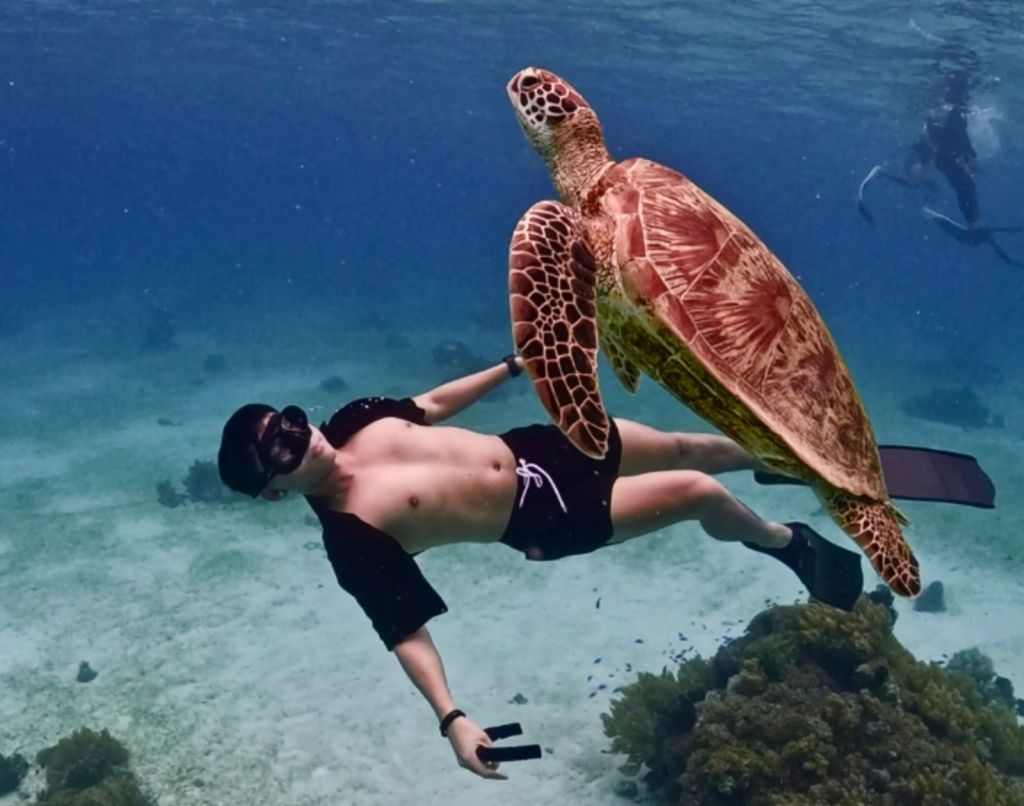
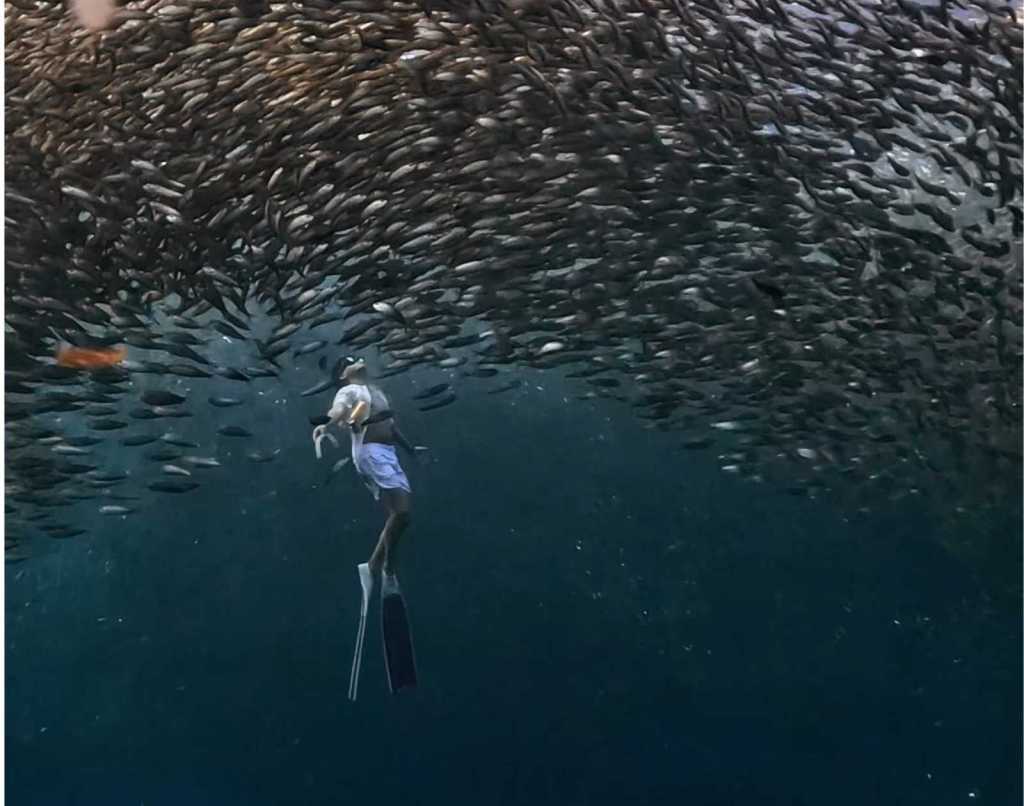
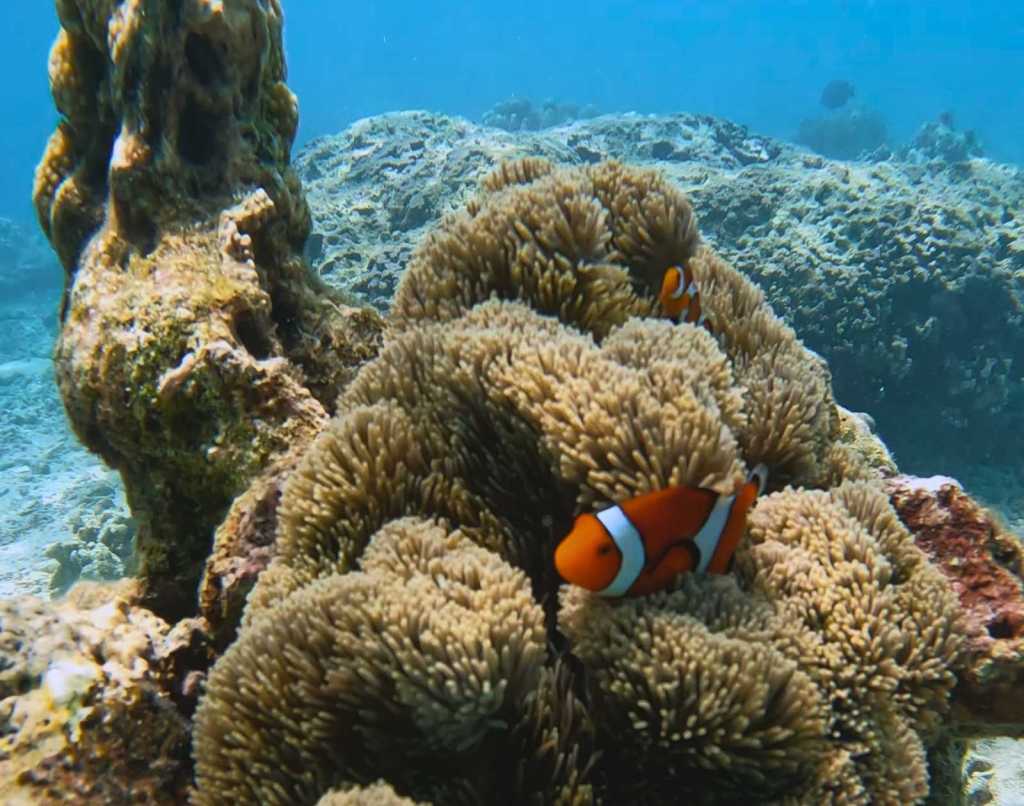
Instead of monsters, you’re more likely to see sardine runs, reef fish, corals, and maybe a curious turtle passing by. The ocean becomes less of a threat and more of a living, breathing world that you are slowly learning to visit as a respectful guest.
Buoyancy Has Your Back (Even If You’re a Non-Swimmer)
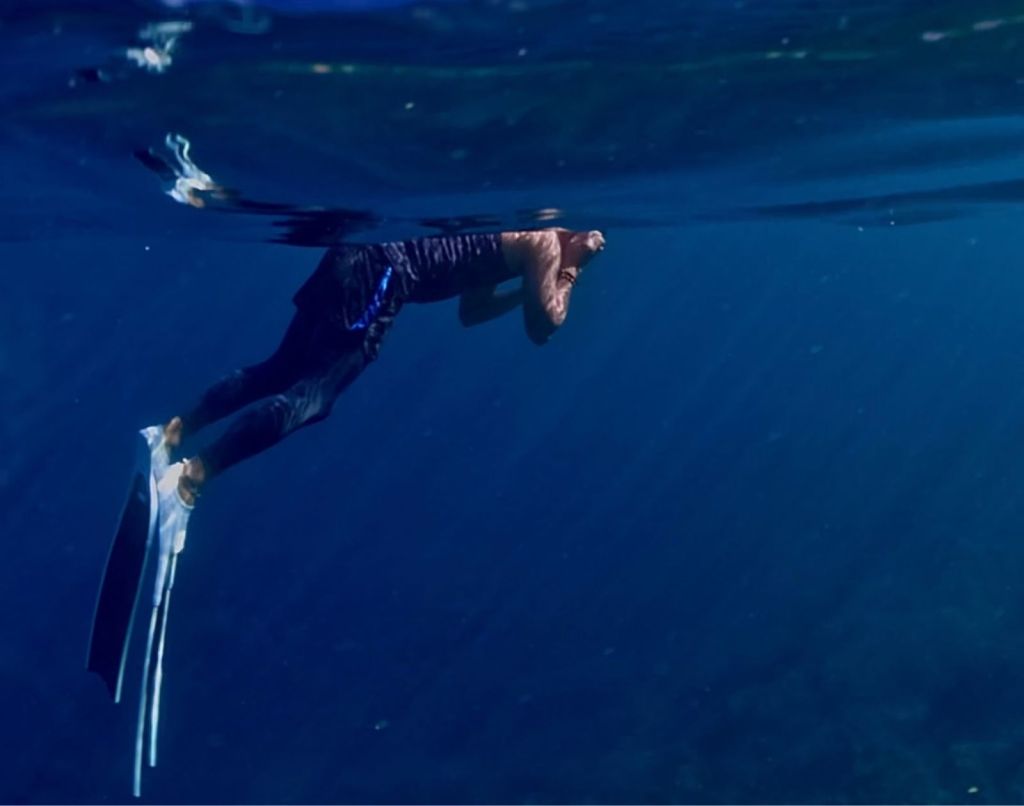
For non-swimmers, one of the biggest fears is simple: “What if I sink and drown?” This is the thought that stops many people from even trying. But here’s the thing that might surprise you: as long as you have air in your lungs and you stay relaxed, you are naturally buoyant.
In seawater, the human body floats even more easily because of the salt content. This is why beginners often feel more secure in the ocean than in a swimming pool. During a beginner freediving course in the Philippines, one of the first things you will do is simply float and breathe at the surface while holding on to the buoy. You don’t need to “swim” in the classic sense. You just learn how to relax, trust the buoy, and let the water hold you.
You’ll have a surface buoy with a line attached. That buoy is your home base – you can hold on to it anytime you feel nervous, tired, or overwhelmed. For non-swimmers, this is a powerful mental anchor: you are never just drifting in deep water. You’re always connected to something solid and safe.
The Role of the Buoy in Your Safety
The buoy is not just a piece of equipment; it’s your floating island:
- It gives you something to hold on to while you rest and breathe.
- It marks your training spot so boats and other water users can see you.
- It keeps the dive line stable, so you always know exactly where you are and where you’re returning to.
When you realize that you’re not alone in the middle of the sea but literally attached to a floating platform with an instructor nearby, your nervous system starts to calm down. That’s when learning really begins.
Your Snorkel Gear Is Your Buddy at Sea
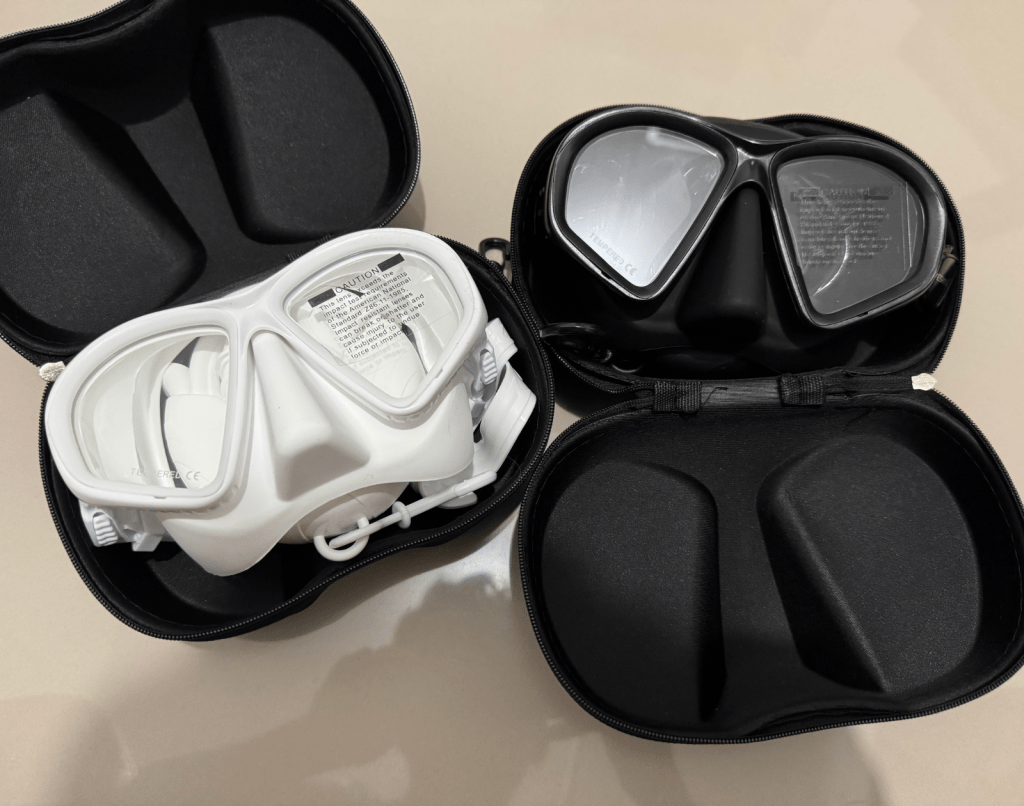
Now let’s talk about your gear, especially your snorkel. For many non-swimmers, the mask and snorkel are the first tools that make the water feel less threatening and more manageable.
Learning to Breathe Calmly Through the Snorkel
You will learn how to breathe calmly through the snorkel at the surface. Your instructor will teach you how to keep your face in the water while breathing comfortably through your mouth. This helps you get used to the feeling of having your nose covered and your face submerged, without the panic of holding your breath just yet.
Clearing Water and Staying Calm
Sometimes a bit of water will enter the snorkel, and that’s okay. You’ll be taught how to clear it with a strong exhale or by lifting your head. This skill alone gives you a huge confidence boost because you realize that water in the snorkel isn’t an emergency. It’s just a minor thing you know how to handle.
Mask and Fins as Your Extensions
Your mask lets you see clearly underwater, which instantly makes things less scary, and your fins help you move with minimal effort. Instead of “swimming hard,” you’ll learn to kick slowly and efficiently, letting the fins and your body position do most of the work.
Together with the buoy, your snorkel setup becomes your best friend: it allows you to rest at the surface, observe the underwater world, and prepare mentally before each dive. For non-swimmers, this is a game-changer. You’re not thrown into deep water and told to figure it out.
You are guided, step by step, with equipment that supports you at every stage!
Why Freediving Can Feel Easier Than Learning to Swim Laps

Traditional swimming often focuses on strokes, speed, and covering distance. That can feel overwhelming for someone who has never been comfortable in the water. Freediving, especially beginner-friendly courses in the Philippines, has a very different focus: relaxation, breath, body awareness, and comfort.
Different Goals, Different Pace
You don’t need to know multiple strokes. You don’t need to race or prove anything. You move slowly, with intention. You learn how to:
- Relax your body at the surface
- Breathe deeply and calmly
- Trust your instructor (or coach), your buddy, your buoy, and your line
- Make short, controlled dives along a line, always coming back to the same safe point
Because the structure is clear and the environment is controlled, many non-swimmers actually progress faster in basic freediving than they do in traditional swim lessons. You’re not trying to overpower the water; you’re learning to work with it.
A Quick Peek at Your First Intro to Freediving Session
You might still be wondering, “Okay, but what actually happens during my first freediving course if I can’t swim?” The good news is: it’s not a chaotic jump into deep water. Your intro to freediving in the Philippines will be slow, structured, and designed for beginners who are still scared of the ocean.
Here’s a very quick snapshot of how a typical beginner session is usually structured:
- You start with dry theory and breathing exercises on land.
- Then you move to shallow, calm water and hold on to the buoy while breathing through your snorkel.
- When you’re ready, you try short, shallow duck dives along the line with your instructor close by.
- You take lots of breaks to rest, reflect, and talk about what you’re feeling.
If you want the full breakdown with a day-by-day, step-by-step guide of what really happens in an intro to freediving course in the Philippines, I wrote a separate in-depth blog for you:
What to Expect in Your Intro to Freediving Course in the Philippines (Day-by-Day Guide)
Mindset Tips for Non-Swimmers Who Want to Try Freediving
If you’re a non-swimmer thinking about freediving in the Philippines, here are a few mindset reminders to carry with you.
You Are Allowed to Go Slow
Progress is not measured by depth alone. Comfort and safety matter more than numbers. You are not in a race; you are in a relationship with the ocean and with yourself.
You Can Say “No” or “Not Yet”
If you’re not ready to go deeper, you can stay at the surface and work on breathing and relaxation. Your journey is yours. A good instructor will respect your pace and help you build confidence layer by layer.
Trust Is Built, Not Forced
Trust your instructor, your buddy, your buoy, and your own body. This trust grows with every small win: every calm breath, every smooth duck dive, every time you choose to listen to your limits instead of ignoring them.
Fear Doesn’t Mean You Can’t Do It
Fear just means you’re human. The goal isn’t to remove fear completely; it’s to move with it more wisely. Over time, what used to feel like pure fear turns into a healthy respect for the ocean and a deeper respect for yourself.
Final Thoughts: From Zero to Hero at Your Own Pace
So, can you learn freediving even if you can’t swim? Yes! Absolutely! As long as you are guided by a qualified instructor, follow proper safety procedures, and give yourself permission to learn at your own pace. The Philippines is one of the best places in the world to start: warm water, beautiful marine life, and welcoming freediving communities that understand beginner fears, especially for non-swimmers.
Freediving will not magically erase your fear of water overnight, but it will give you tools to understand it, manage it, and eventually transform it into respect and confidence. If this is something your heart keeps coming back to, maybe it’s time to listen. Your journey from zero to hero won’t be measured only in meters. It will be measured in courage, self-discovery, and the quiet joy of realizing that the ocean is no longer something you run away from, but a world you can finally visit with calm, presence, and a smile on your face.
From reefs to wrecks, I share my freediving and travel adventures on Instagram, TikTok, and YouTube @froyows.
© 2026 Froyows Travel & Freediving. All Rights Reserved.
Powered by LB Digital Marketing Services.
 FROYOWS TRAVEL & FREEDIVING
Leave a comment