Dear beginner freedivers, if you’re just starting your journey into freediving, especially during your intro course, my advice is simple: hold off on buying your own gear for now! Why? I’ve seen so many beginners who got excited after watching videos or scrolling through dive shops, then bought gear on impulse before even finishing their first course. Some of them ended up realizing that freediving wasn’t for them, or that it wasn’t something they wanted to pursue regularly. The result? Their shiny new equipment gathered dust in a closet, and their money went to waste, or they started selling them off at a way lower price.
That’s why I strongly recommend renting gear for your intro course. Almost all freediving schools provide rentals, and many packages already include gear in the price. Renting gives you a chance to try different masks and fins, understand what feels comfortable, and get a sense of whether you truly want to commit to this sport before making an investment.
When do I start buying and investing in freediving gear?
If you’ve finished your intro course, and after 2 or 3 fun dives, you loved the experience and felt like you want to continue the lifestyle, then that’s the time to consider buying your own gear. Owning the right equipment can make your dives more enjoyable, give you consistency in training, and help you progress faster. Here are the first pieces of gear I recommend you invest in as a beginner freediver:
1. Low-Volume Mask
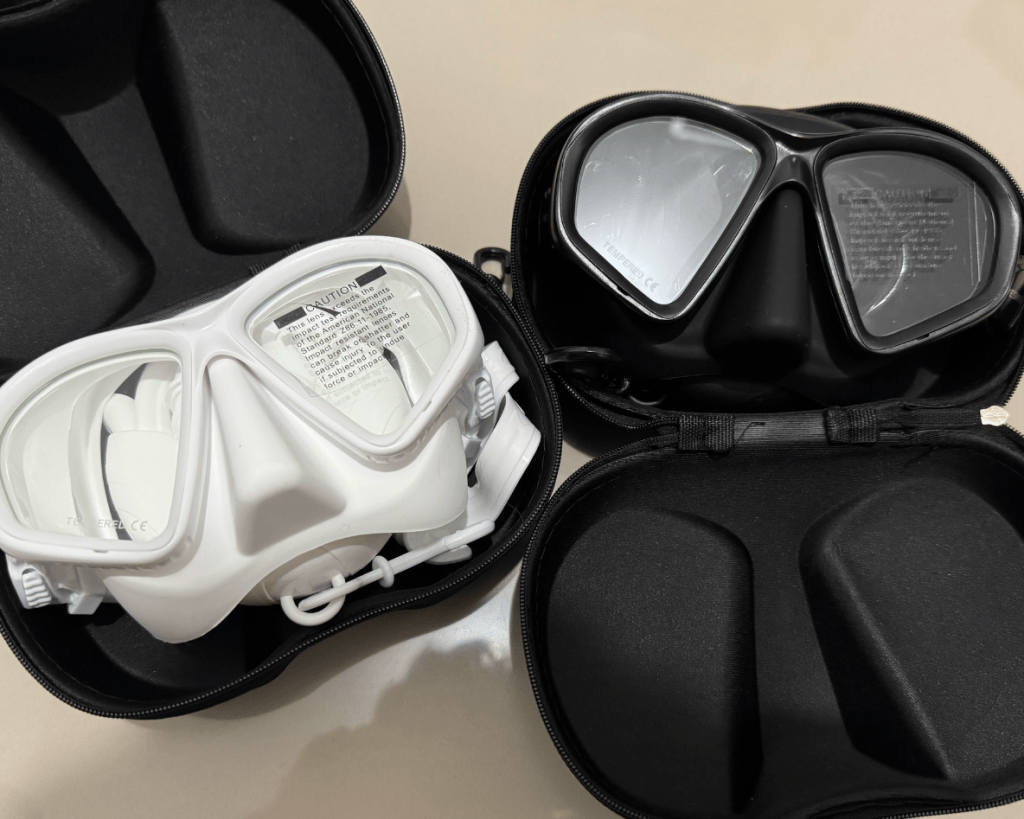
A low-volume mask is one of the most important pieces of freediving gear because it requires less air to equalize as you dive deeper. This means less wasted energy and smoother descents. Rental masks work fine for your first few dives, but having your own ensures a perfect fit for your face, reducing the risk of leaks and discomfort. A mask that feels like an extension of you can make your dives more comfortable and confidence-boosting.
Oval Masks:

A lot of people ask me if oval masks are okay for freediving, and the answer depends on what you’re after. They work best in shallow waters and what we call awra diving (close-up, artistic shots that show your whole face under the sun’s rays, creating that laser-beam effect through the lens). But they are high-volume masks, which means they require more air to equalize. Yes, you need to equalize your mask because the pressure builds as you go deeper, and it can get painful on your face if you don’t.
How do I equalize my ears with it? If you use hands-free equalization, this won’t be a problem, but if you’re using the Valsalva maneuver, don’t worry: oval masks usually have finger pockets so you can still pinch your nose as you descend.
2. Fins
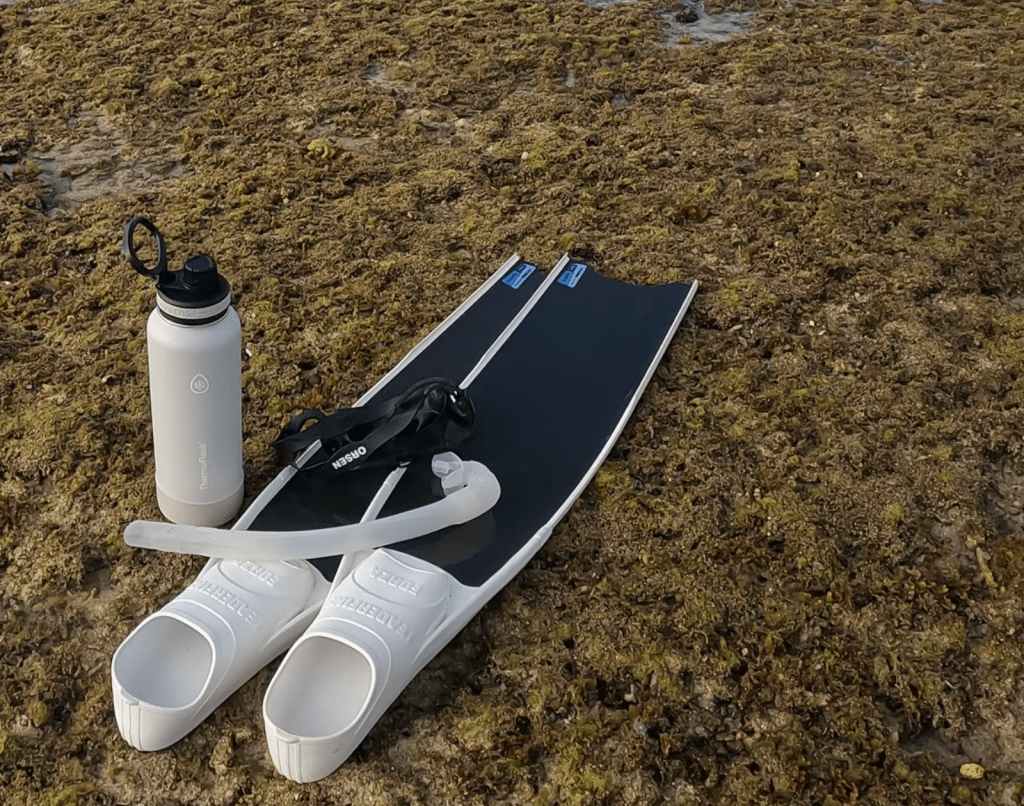
Fins are a game-changer in freediving. Rental fins are often made of rubber or plastic and designed for general use, which is fine at first. But once you’re committed, investing in your own pair makes a huge difference in efficiency and comfort. Owning fins lets you build a consistent kicking technique and reduce fatigue in the water.
Types of Fins
- Rubber Fins: Great for beginners and budget-conscious divers. They provide low propulsion but are excellent for practicing and refining your finning technique in shallow waters.
- Plastic Fins: Affordable and sturdy, these are often the first upgrade for beginners. They offer medium power, good for training, but tend to be heavier and less responsive than higher-end fins.
- Fiberglass Fins: A step up in performance, these fins are lighter and more responsive than plastic, providing better efficiency and smoother propulsion. They’re a solid choice for freedivers who want to improve technique and dive deeper.
- Carbon Fiber Fins: Known for their flexibility, lightness, and power, carbon fins deliver excellent efficiency with less effort, making them a favorite for intermediate and advanced freedivers. Some premium models are marketed as “pure carbon” to highlight higher carbon content and more responsive performance. In reality, they are still carbon fiber fins; the difference lies in construction quality, carbon-to-resin ratio, and weave design. High-end “pure carbon” versions feel incredibly smooth and powerful in the water, but they’re also more fragile and expensive, requiring extra care during travel.
Pros of owning your fins:
- No need to rely on rental stock or availability.
- You can travel with them and train anytime.
- They’re molded to your size, so no more struggling with loose or tight foot pockets.
Cons to consider:
- Extra cost when traveling, since some airlines may charge for oversized or sports equipment. Always check their policies before your trip.
- Risk of damage or delays if airlines mishandle your bag. Many freedivers in the Philippines use hard cases or PVC tubes to protect long fins during flights and ferry transfers.
- Quality fins can be pricey, so it’s an investment you’ll want to protect, especially if you’re training regularly in hotspots like Moalboal or Panglao.
Bonus: Underwater Camera
Not essential for freediving itself, but an underwater camera can enrich your journey. Capturing your dives helps you track your progress, refine your technique, and relive your ocean adventures. It also allows you to share your experiences with friends, family, or even a community of fellow freedivers. Just remember: always prioritize safety first, and don’t get too distracted by filming during your dives.
FINAL THOUGHTS
Freediving is not just about holding your breath and going deep; it’s about embracing a lifestyle that connects you with the ocean in the purest way possible. Investing in your own freediving gear after your intro course is like saying yes to this journey, but the key is to do it smartly. By starting with essentials like a low-volume mask and proper fins, you’ll build consistency, confidence, and comfort in the water. These tools aren’t just equipment; they’re extensions of your body that will help you explore deeper, move more efficiently, and experience the freedom that makes freediving so addictive.
Here in the Philippines, with world-class freediving spots like Moalboal, Apo Island, and Panglao, owning your gear opens the door to endless opportunities. You can dive with ease, train regularly, and discover the reefs, turtles, and vibrant marine life on your own terms. Remember, every peso you spend on quality gear is an investment in your growth, safety, and enjoyment. So take your time, choose wisely, and let each piece of equipment support your journey into the depths. The ocean is waiting, and with the right gear, you’ll be ready to meet it head-on.
Follow my journey exploring the Philippines and beyond; on Instagram, TikTok, and YouTube @froyows.
© 2026 Froyows Travel & Freediving. All Rights Reserved.
Powered by LB Digital Marketing Services.
 FROYOWS TRAVEL & FREEDIVING
Leave a comment